
Join our Support Group
Your questions and concerns have most likely been asked and answered in our support group.
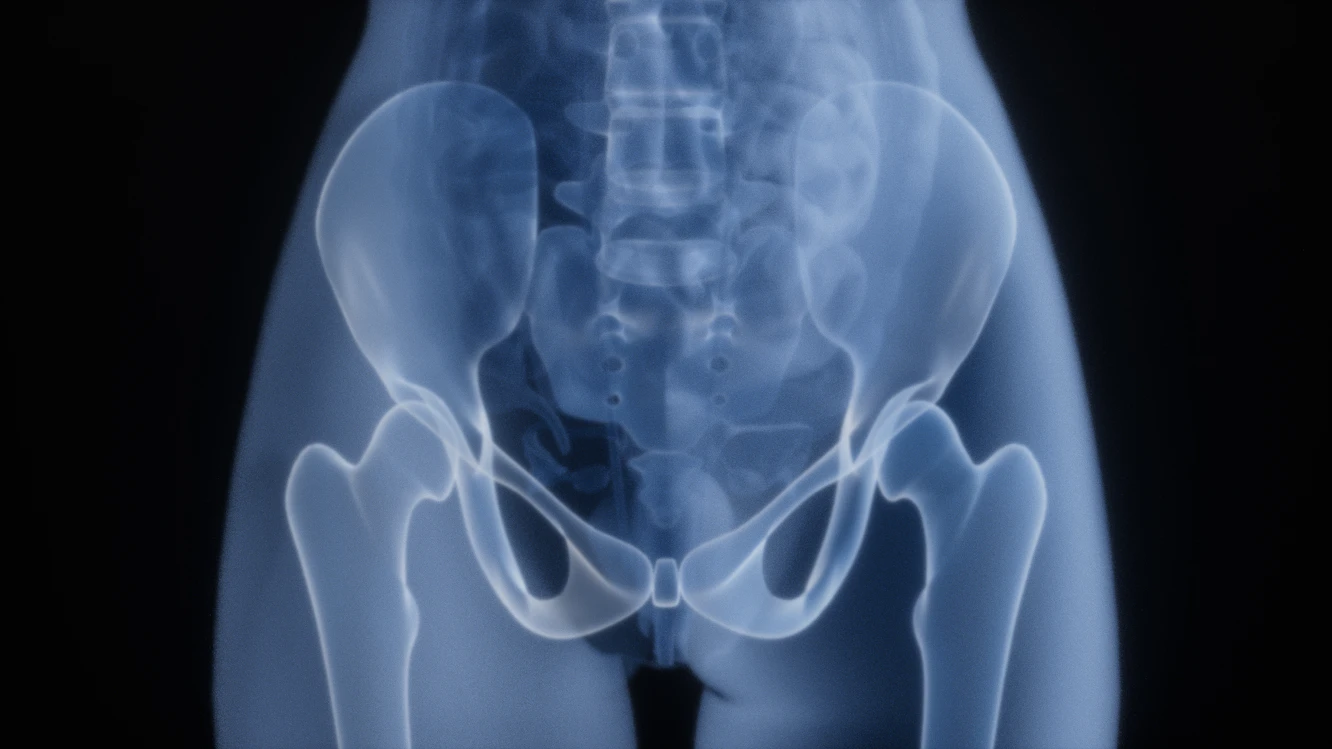

How Long Does a Hip Replacement Operation Last? A Step-by-Step Breakdown

A primary total hip replacement operation usually takes one to two hours, but that estimate covers only the surgery itself. Patients also need time for anesthesia and preparation beforehand, followed by monitoring in recovery immediately after the surgery.
During the procedure, damaged parts of the hip are removed and replaced with prosthetic components (Johns Hopkins Medicine, n.d.). The exact duration a patient will spend in the operating room depends on the patient’s health and the complexity of the operation. At Ortho Westmount, we explain what happens at each stage so patients can understand the surgical timeline and plan for the full day of care.
How Long Does a Hip Replacement Operation Last?
Preparing for Total Hip Replacement Surgery
Before surgery, the orthopedic team reviews the patient’s preoperative X-rays to assess the anatomy of the hip and plan the procedure. This includes determining the appropriate type and size of prosthetic device, as well as other technical details of the surgery. The team also verifies the surgical site and completes the required safety checks. Anesthesia is then administered according to the planned operation and relevant patient factors.
Hip replacement may be performed under general anesthesia or with a regional anesthetic such as a spinal block, which numbs the lower body. Once the anesthesia has taken effect, the patient is positioned so the surgeon can reach the hip safely. These steps add to the time spent in the operating room, but they fall outside the usual one-to-two-hour estimate for the operation itself.
What Happens During Hip Replacement Surgery?
The hip is a ball-and-socket joint. The femoral head at the top of the thigh bone forms the ball, which moves inside a socket, called the acetabulum, in the hip bone.
In a unilateral total hip replacement, during surgery, an incision will be made on the appropriate side to access the hip joint. Depending on the surgical approach, the incision may be made at the front of the hip (anterior approach), along the side (direct lateral approach), or toward the back (posterior approach). The surgeon will carefully separate or move the surrounding muscles and soft tissues to expose the hip joint, allowing access to the femoral head and the acetabulum. The damaged femoral head is removed, and the hip socket is cleared of damaged cartilage and bone. The surgeon then shapes the socket to receive a new cup, usually fitted with a liner made from polyethylene plastic.
The upper thigh bone is prepared next. A metal stem is inserted into the femur, and a replacement ball is attached to it. Once that ball is placed inside the new socket, the components form an artificial ball and socket hip joint.
Depending on the implant plan, the components may be fixed with bone cement or a porous surface that allows bone to grow into it. A hybrid total hip arthroplasty combines these two methods. The National Institute of Arthritis and Musculoskeletal and Skin Diseases provides detailed information about implant materials and fixation (NIAMS, n.d.).
Before closing the incision, the surgeon assesses the position of the components and the stability of the new joint. The patient is then transferred to the recovery area.
What Can Affect the Length of the Operation?
The one-to-two-hour estimate generally applies to a standard primary surgery, but each individual's hip presents different technical demands. Extensive joint damage or bone loss can add time, while previous operations may leave scar tissue or alter the anatomy around the joint.
The reason for surgery also shapes the procedure. Treating advanced hip arthritis, for example, differs from operating after a hip fracture. A partial replacement may be shorter because only the femoral side of the joint is replaced. Having both hips replaced during the same surgical session requires more time.
Hip resurfacing follows another process because it preserves more of the femoral head. Revision surgery is usually more complex. The surgeon may need to remove an existing hip implant, manage bone loss or treat problems such as loosening or infection. For these reasons, revision procedures commonly last several hours.
A longer operation does not automatically indicate a complication. In many cases, the surgeon simply needs more time to manage the anatomy or position the components securely.
Does the Surgical Approach Affect the Timeline?
The hip can be reached from the front, back or side. Each surgical technique follows a different route through the muscles and other tissues surrounding the joint.
The chosen approach reflects the patient’s anatomy and the procedure being performed. The training and experience of the orthopedic surgeons also inform that decision. Although incision size may influence certain parts of recovery, it does not reliably predict how long the operation will take.
Hip replacement remains major surgery, so safe access and accurate component placement take priority over speed. Our overview of hip surgery at Ortho Westmount provides more information about the forms of joint replacement available through our Montreal clinic.
What Are the Risks?
Like any operation, hip replacement carries risks. Possible complications include blood clots and blood loss, along with concerns such as nerve damage or dislocation and post-operative infection.
The likelihood of these problems varies according to personal risk factors, the condition of the joint and other clinical factors. Before recommending surgery, the surgeon reviews the patient’s health and explains how the potential concerns relate to that individual case.
How Long Will You Be at the Surgical Facility?
The full surgical visit lasts longer than the operation. Admission and anesthesia preparation come first, while recovery-room monitoring begins after the incision has been closed.
As the anesthetic wears off, the care team follows the patient’s vital signs and level of alertness. Pain control is reviewed, and any concern requiring further care is addressed. Once the patient is medically stable, the team also assesses safe movement. Early mobility may include placing weight through the operated leg with a suitable walking aid.
Selected hip replacement patients can leave the facility on the same day. Others need additional observation or an inpatient stay, depending on their condition and progress. The recovery time then continues at home, with full recovery often taking a few months. A physical therapist may guide exercises, while physical therapy supports the gradual return of strength and function.
Patients considering private treatment can review our published orthopedic surgery fees. Pricing is determined individually according to the procedure and case complexity.
How Long Does an Artificial Hip Replacement Last?
There is no single life expectancy for every artificial hip. Activity level and wear can affect an implant over time, as can a later injury. Regular follow up allows the surgeon to assess the replacement and investigate new symptoms. A serious problem with the components may eventually require surgery, but the length of the original procedure does not predict that outcome. A large study found that most hip replacements remain functional for many years. Among more than 60,000 patients, 4.4% required revision within 10 years, increasing to 15% by 20 years after surgery (Bayliss LE, Culliford D, Monk AP, Glyn-Jones S, Prieto-Alhambra D, Judge A, Cooper C, Carr AJ, Arden NK, Beard DJ, Price AJ. The effect of patient age at intervention on risk of implant revision after total replacement of the hip or knee: a population-based cohort study. Lancet. 2017 Apr 8;389(10077):1424-1430. doi: 10.1016/S0140-6736(17)30059-4. Epub 2017 Feb 14. Erratum in: Lancet. 2017 Apr 8;389(10077):1398. doi: 10.1016/S0140-6736(17)30936-4. PMID: 28209371; PMCID: PMC5522532.)
Discuss Your Hip Joint Replacement Surgery Timeline With Ortho Westmount
A primary hip replacement usually takes one to two hours, while revision surgery and more complex procedures can take longer. The full visit also includes preparation before the operation and monitored recovery afterward, so patients should plan for more than the estimated surgical time.
At Ortho Westmount, we begin by assessing the cause of your hip pain and reviewing the treatments you have already tried. If hip replacement is appropriate, we explain the proposed procedure, its expected duration and how it fits into the broader recovery process. We also discuss when a return to daily activities may be reasonable based on your health and progress after surgery. Contact our Westmount clinic to request an appointment and receive guidance based on your individual case.
References
Johns Hopkins Medicine. (n.d.). Hip replacement surgery. https://www.hopkinsmedicine.org/health/treatment-tests-and-therapies/hip-replacement-surgery
National Institute of Arthritis and Musculoskeletal and Skin Diseases. (n.d.). Hip replacement surgery. https://www.niams.nih.gov/health-topics/hip-replacement-surgery

4 Westmount Square, Suite 250
Westmount, Quebec H3Z 2S6
Administrative Office
1 Westmount Square, Suite 801
Westmount, Quebec H3Z 2X3